
Raising Eco-Conscious Kids: A Relatable (and Messy!) Guide to Earth Day
(Written by Emily Thomas)
There is no denying that by the time April rolls around, we are all feeling a little stir-crazy. After a long winter of being cooped up indoors, our living rooms likely look like a toy tornado hit them, and the exhaustion of keeping children entertained in the same four walls is very real. Whether you are a parent trying to survive the morning shift or a nanny looking for a fresh spark of energy, we have all been there—staring out the window, just waiting for the first sign of green and a chance to get those wiggles out.
However, the arrival of spring is a wonderful opportunity to reset and refresh! Every year on April 22nd, the world comes together to celebrate Earth Day—a movement that began in 1970 and has since grown into a global call to protect our natural resources. But for us at Napp, Earth Day is more than just a historical milestone or a single day of awareness; it is a chance to practice what we preach in our daily routines. At Napp, we focus on providing exceptional, hands-on care that goes the extra mile to spark a child’s natural curiosity. It is a moment to show our children that taking care of our environment locally is exactly how we make a global impact, turning our backyards into boundless outdoor classrooms.
Earth Day Storytime: Telling the "Why" to Your Little Ones
There is no denying that history can sometimes feel a bit dry, and trying to explain environmental policy to a toddler is no easy feat. However, children are naturally empathetic, and they love a good story about helping others. When the kids ask why we are planting seeds or picking up litter, you can share this "paired down" version of how Earth Day began:
The "Once Upon a Time": Once upon a time, back in 1970 (way before even Mommy or Daddy were born!), people started to notice that our planet was losing its natural sparkle. The air was becoming hazy with smoke, the sparkling blue rivers were getting cluttered with trash, and the animals were losing the wild spaces they needed to thrive. It became clear that our big, beautiful Earth needed more than just a quick cleanup—it needed a community of heroes to protect it.
The Big Idea: This big idea came from a man named Gaylord Nelson. Gaylord grew up in a beautiful place called Wisconsin, where he spent his childhood playing in the woods and swimming in clear lakes. Because he loved the outdoors so much, he grew up to be a Senator—a leader who helps make rules for the country. He saw that the Earth was getting hurt by pollution and realized that if we didn't speak up for the trees and the animals, no one would. He thought, "What if everyone in the whole country stopped what they were doing for one day to learn how to be a better friend to the trees, the animals, and the oceans?"
The First Birthday Party: On April 22, 1970, millions of people—including lots of kids just like you—went outside to clean up parks and plant flowers. It was like a giant birthday party for the Planet! Because so many people joined in, the leaders in the government realized they had to make new, strong rules to keep our air, water and earth clean. It wasn't just a fun day; it was the day the world decided to make it "official" that protecting nature is a job for everyone.
Our Part: Now, every year, we join in to say "thank you" to the Earth. Whether it’s recycling a milk carton or watering a tiny sprout, we are part of that big team of heroes that started over 50 years ago! There is no denying that the "team of heroes" is still hard at work right now. In 2026, we are seeing incredible new advancements that help protect our families, such as updated safety standards that focus on keeping harmful chemicals out of our food and environment. Not only are we seeing big changes like these, but many states are also saying a final goodbye to plastic bags and single-use foam containers. Whether it’s a big nationwide initiative or a new rule at your local grocery store, these changes are all designed to ensure that when you grow up, you have the same clear lakes and green woods that Gaylord loved so much.
Small Hands, Global Heart: Why Local Action Matters
We often hear about "saving the planet," and for a three-year-old (and let’s be honest, for us too!), that can feel incredibly abstract. How does picking up one piece of litter in the park help the whole world?
Not only does local action produce immediate results you can see, but it also builds the "empathy muscles" children need as they grow. When we show our kids how to treat their immediate surroundings with respect, we are teaching them that their actions have weight. Whether it’s choosing a reusable water bottle or gently relocating a spider, these small, consistent choices are the building blocks of a global mindset. Plus, there is no better way to teach than by modeling the behavior ourselves.
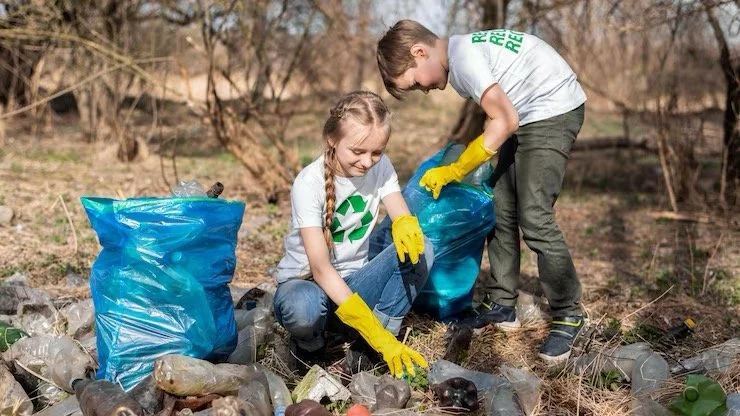
There is no denying that children are like little sponges, absorbing every small choice we make throughout the day. When we take that extra minute to sort the recycling together or choose a local park cleanup over a morning of screen time, we are demonstrating that stewardship is a high-quality value, not just a one-day-a-year activity. This hands-on approach makes the "big" global issues feel manageable and modular for little minds. However, the most rewarding part isn't just a cleaner neighborhood—it’s the look of pride on a child's face when they realize they’ve done something truly exceptional for the world around them.
Start Small: The Windowsill Garden
You don’t need a sprawling backyard or a professional greenhouse to teach the beauty of sustainability. Not only is a windowsill garden practical for small spaces, but it is also an enriching way for children to see the literal roots of their food.
Use plastic egg cartons or even clear plastic cups so the kids can actually see the root systems develop. Watching a tiny seed transform into a sprout is an exciting, interactive experience that builds a sense of wonder. For our Napp caregivers, this is a wonderful daily activity to bond over. Whether it’s watering the plant "babies" every morning or checking for new leaves, these small moments create high-quality memories that stick.
"Recycled Masterpieces": The Art of the Bin
Gardening and "going green" with littles is often messy and unpredictable. There will be dirt on the floor, and water will almost certainly end up somewhere it shouldn't. But within that mess, there is a hands-on lesson about giving "old" things a new life.
Before you toss that milk carton or toilet paper roll, hit the craft table. A milk carton can easily become a charming bird feeder, and those cardboard tubes make excellent "nature binoculars" for a backyard safari. This approach is the best of both worlds—it keeps the kids engaged with kid-friendly crafts while teaching them that we can protect our planet by being creative. It’s about showing them that "waste" is often just a resource waiting for a second chance.
Beyond the Backyard: The "Eco-Walk"
Sometimes, the best way to celebrate the Earth is simply to be in it. A simple neighborhood stroll or a trip to a local park can quickly become a high-quality, interactive learning session if you have the right tools.
Host an "I Spy" Nature Edition! Challenge your little ones to find three different shaped leaves, a budding flower, and a bug. Not only does this keep them moving, but it also sharpens their observational skills. As always, we emphasize keeping things safe and reliable. While we want them to explore, make sure to set clear professional boundaries: stick to the paths, apply that sunscreen, and always do a quick tick check when you get back to the house.
The Reward: Why We "Go the Extra Mile"
There is no denying that it is often much easier to stay inside, turn on a favorite show, and avoid the mud-streaked floors that inevitably follow an afternoon in the dirt. Parenting and caregiving are exhausting, and some days, just keeping everyone fed and clean feels like an Olympic feat. We understand the temptation to choose the path of least resistance when you're running on fumes.
However, when we choose to step outside and engage with the world, we are doing so much more than just killing time before naptime. The reward comes in those quiet, exceptional moments: seeing a child’s eyes widen as they finally understand where their carrots come from, or watching them stop in their tracks to gently move a ladybug out of harm’s way.
At Napp, we believe that nurturing this sense of wonder is just as vital as ensuring a safe, screened environment. Not only are we providing high-quality care, but we are also acting as a force multiplier for a child’s development. Whether it’s the patience required to explain composting for the tenth time or the extra laundry created by a "nature potion" gone wrong, we go the extra mile because we know we are raising the next generation of eco-conscious humans. It is a soothing, memorable process that reminds us why the "hard parts" of this journey are so incredibly rewarding.
Let’s Grow Together!
We want to see your "Green Thumb" moments in action! Whether it’s a thriving herb garden or a dirt-covered disaster that ends in a bath, it’s all part of the beautiful journey of raising kids. Tag Napp Network in your Earth Day photos—we can’t wait to see how you and your family are making the world a little greener, one sprout at a time.